 We always knew webcomics were rad and deserve attention, but a spot in the Library of Congress? What wonderful news! We’ve also got some wonderful webcomics like Fantasma, Off White, and Genji Cat.
Podcast: Play in new window | Download


We always knew webcomics were rad and deserve attention, but a spot in the Library of Congress? What wonderful news! We’ve also got some wonderful webcomics like Fantasma, Off White, and Genji Cat.
Podcast: Play in new window | Download
So, I’ve been catching up on Dave Kellet’s excellent sci-fi webcomic, Drive. Trawling back through the archive not only reminded me how much I love the universe Kellett has invented, but also how unparalleled webcomics are at ‘driving’ innovations in storytelling and genre. In this case, bringing ever new and unique takes to the ubiquitous faster-than-light travel of Space Opera.
If you’re unfamiliar with Drive (pretty mild spoilers ahead, but be warned nonetheless!), Kellett’s FTL technology follows some pretty familiar concepts – on the surface. Each of the starships that use the drive technology are fitted with a ‘drive ring’, the unseen technology inside which is used to manipulate gravity fields. By doing so, the rings create singularities through which “pinches” space, therefore allowing FTL speeds. Where it gets interesting, though, is that Kellett implies the technology in humanity’s drive rings may be sentient. And that little development becomes the driving force behind the conflict in his plot – because the alien race that invented the technology which humans copied view it’s budding sentience as an abomination, and take exception to our using it to forge our empire.
It speaks to the value of webcomics – and sequential art in general – that Kellett is able to develop and explore the implications behind this technology, and spin an entire galaxy-spanning plot around it. And he’s not alone. Longtime webcomic fans will recognise the parallels found in Kris Straub’s Starslip and Howard Tayler’s (recently mentioned) Schlock Mercenary. These classic webcomic space operas also spend a great deal of time and plot centrality focusing on FTL technologies – much more than you get in other forms of storytelling (such as film or television). For example, the hyperdrive of Star Wars is certainly used as a plot device, but the way in which it actually operates is barely mentioned. Neither is the warp drive of Star Trek central to the development of plots in the movies or the TV series’ – it’s just a device to get you to the place where the story happens, or break along the way so the characters have something to do.
By contrast, the crisis that resulted from using Starslip engines to jump between parallel universes was the whole focus of the original series’ plot – and marked the separation between original narrative arc and the new focus of time travel in the soft reboot. In a similar way, the invention, spread and subsequent ubiquity of the the teraport drove the plot of Schlock Mercenary’s first two books, the ripples of which still play out in the background of the series.
It’s an approach you can only get from webcomics – taking the time allowed by months and years of updates to develop the narrative around these technologies and make them more than simple window dressing in the background. Even better, by having the time to play around with new things, webcomics get to invent the sort of complex and weird technologies that you couldn’t get through to the audience of a movie. Or which end up getting TV series cancelled. Kellett, in Drive, is taking full advantage of the format and the creative freedom it allows. And even if it’s a little frustrating to wait soooo long for the answers we’re slowly getting, it’s still thrilling to watch him spend the time to really develop and explore his technology and from that fabric, weave his grand narrative.
What do you think? Do you know any other space-sailing webcomics with a unique take on FTL travel? Or is our interest in this getting lost in space? Let us know in the comments!
And until next time, remember – don’t eat the clickbait!
 Vacation’s over and it’s time to talk about a LOT of wrestling! Money in the Bank came and went, Carmella stole the briefcase (twice), and that lovable bearded maniac made his return. Things are going pretty well, so let’s talk about our hopes and fears for the first-ever Great Balls of Fire PPV event!
Podcast: Play in new window | Download
 If someone doesn’t know what popping and locking is, how do you show them? Steve wants to know. If you play video games around your kids, how do you hide your competitive ugliness? Jason wants to know. And everyone wants to know the best creative curses to utilize when the children are around.
Podcast: Play in new window | Download
The story of Tom Siddell’s Gunnerkrigg Court is a sweeping tale of magic and technology, the clash between the old and the new, and the coming of age for main characters Antimony Carver and Kat Donlan. Overseeing this tale are two opposed factions, the shadowy leaders of the eponymous Court, and the flamboyantly-non-shadowed Coyote, God of the forest that surrounds the school. In fact, Coyote and his machinations have had an increasing presence in the comic, following the relatively early appointment of Antimony as the forest’s representative in the court, the summer she spent living in the forest, her growing relationships with Coyote’s minions Reynard and Ysengrin and more recently (minor spoilers ahead!) the freeing of Jeanne, the guardian spirit who separated the denizens of the forest and the court. But who is Coyote, and what resemblance does he bear to his real-world mythological counterpart? Continue reading
Back in 2014, our very own Digital Dynamic Duo took on a challenge of truly diabolical proportions – bringing the vast, 16-year old sprawling universe of Howard Tayler’s Schlock Mercenary into your earbuds, through the tried-and-true stalwart of the airwaves: the Digital Strips Book Club!
Turns out, though, that reading through every update of a webcomic that’s being going since June 2000 is a galaxy-sized task all of itself. So rather than saddle you, dear readers and listeners, with the boredom a grind like that can bring, the Geek and the Midnight Cartooner moved on to greener pastures vowing that they would, one day, return.
And so, in the spirit of that fine tradition we introduce the Book Club Bookmark: A look back at the comics which have been covered by the podcast in Book Club form, and seeing where those comics are today (if they are still updating at all). Continue reading
There’s nothing quite like getting stuck into a long-running long-form webcomic.
I mean, gag-a-day and strip comics are great too, but you don’t get the same kind of joy you get watching your favourite characters grow and develop week by week: fleshing out backstories, deepening their characterisation, refining the way secondary characters interact with the protagonist/s and even watching them go off on their own adventures, and…
Hang on, whatever happened to that character? It’s been years now since they took that new job in another city, shouldn’t we check in to see how it’s going?
Nope! That character you were invested in has fallen victim to the trope so common in this form of storytelling: the rotating cast roster.
“But I loved that character”, I hear you cry! “Why would the author do this to me?” – now before you rage-quit the comic, or lose interest and let it languish as an open browser tab with the dozens of others you’ll never get back to (looking at you, Steve!), let me explain why your favourite comics do this, and why it really is a good thing. Continue reading
 Jason still loves the Fashion Files, but has no time for Facetime in wrestling matches and thought Raw was a rerun this week. Steve dug Okada vs. Omega, loves that Lucha Underground is back, and stays hyped about the return of the Hype Bros. Together, they run down the Money in the Bank card, including two MitB Ladder Matches!
Podcast: Play in new window | Download
 Steve assumes any lady wearing matching underwear is up to something, so Jason helps him crank that up to 11. Also, have you really given the Dan Aykroyd getting his weiner touched by a ghost scene in Ghostbusters enough thought? The guys think not and offer their opinions and expertise.
Podcast: Play in new window | Download
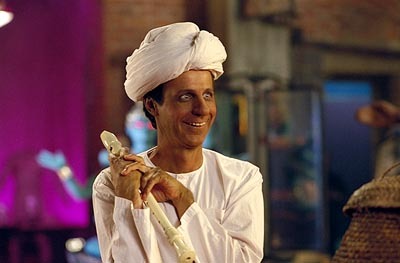
NOT a Jinder Mahal joke
No matter what you thought about the endings of Extreme Rules, it’s behind us and we move on. This week, we talk about how awesome Samoa Joe was with Paul Heyman, how Dean Ambrose loves to hide (and we love him for it), the continuing Cassening, the Women’s Money in the Bank briefcase, the continued excellence of the Fashion Files (telepathy and romper edition), and the no-go for Mojo.
Podcast: Play in new window | Download
